Navigating international cross-border e-commerce catalogs for the first time can feel overwhelming due to unfamiliar interfaces, varying sizing conventions, and complex shipping choices. Understanding how to use Kakobuy spreadsheets for beginners offers a straightforward roadmap to discovering items efficiently without getting lost in endless rows of raw data. Modern web-based catalogs convert dense spreadsheet data into structured product pages, making it simple to evaluate listings, double-check specifications, and send selected items to your preferred fulfillment service.
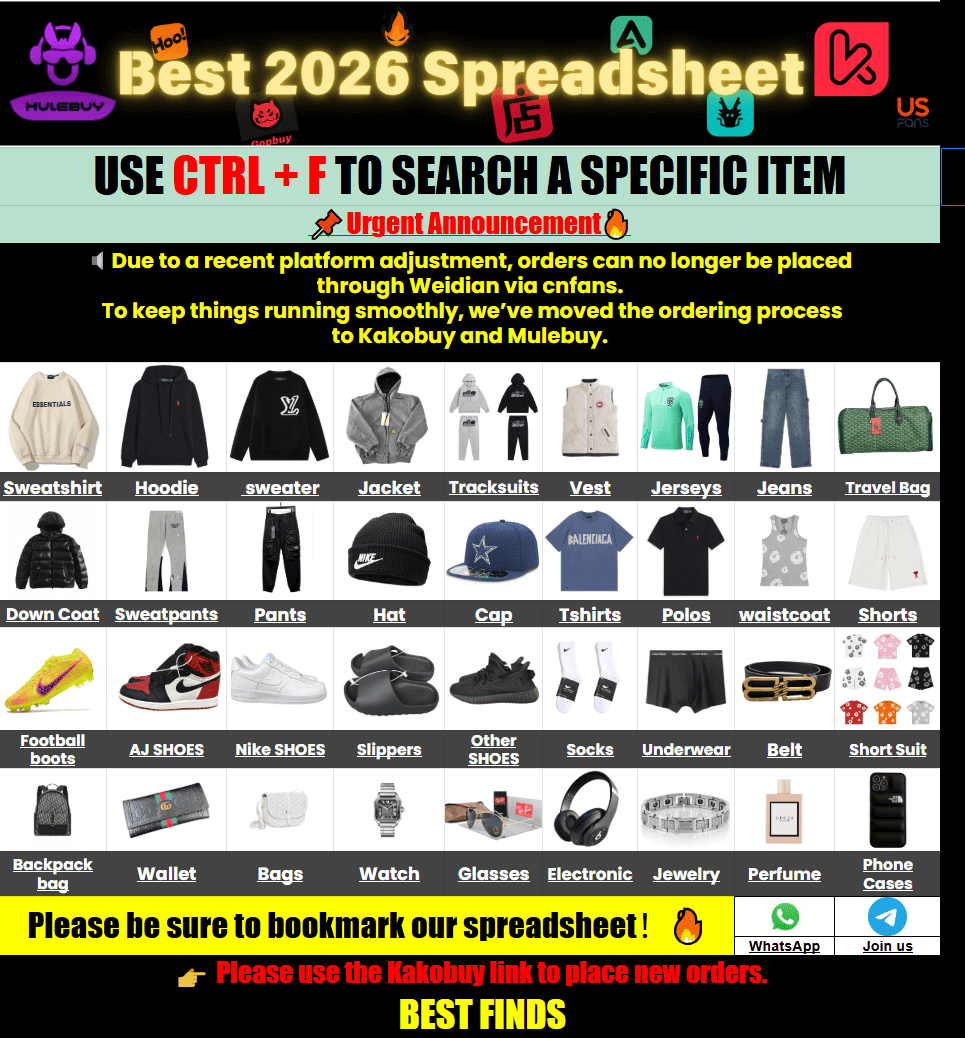
This isn’t just a spreadsheet—it’s a Live Supply Chain Index. We aggregate real-time data from Taobao, Weidian, and 1688, filtered through rigorous community quality benchmarks to help you discover only the “best-in-class” options. For easier access to Taobao listings, you can also use our Taobao link converter to quickly convert and work with product links.
Smart Search Tip: Looking for more? To find items instantly, use single-word keywords (e.g., “SHOES” or “T-SHIRT”) instead of long sentences for the best results.
Table of Contents
How Web-Based Sourcing Catalogs Simplify Discovery
Traditional sourcing relies heavily on massive shared Google Sheets. While these documents hold vast amounts of information, they present distinct drawbacks for everyday shoppers. Large spreadsheets lag on mobile devices, links frequently break without notice, and image previews remain small or nonexistent. A modern web catalog solves these bottlenecks by indexing product details into an e-commerce format.
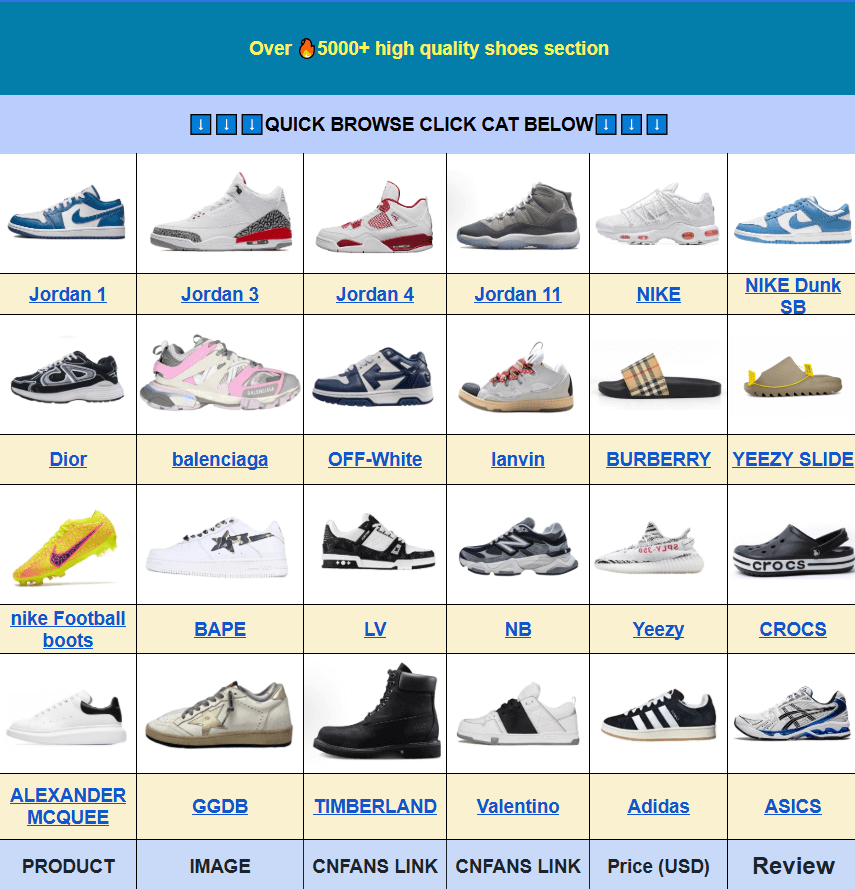
Instead of manually copying seller links across multiple browser tabs, users browse organized categories, inspect high-resolution product photos, and view price estimates in a single layout. The platform functions as an information discovery hub. Once a buyer identifies a item of interest, clicking the link redirects them to an external shopping agent to manage warehouse receiving, quality checks, and international parcel dispatch.
When searching for reliable directories, consulting curated sources like the Kako buy spreadsheet ensures that product links remain updated and organized logically across major apparel and lifestyle categories.
Navigating Sizing and Product Specifications
One of the most common hurdles for newcomers involves sizing disparity. Direct-from-factory listings do not follow standardized Western retail sizing. An item labeled “XL” from one factory might fit like a Western “Medium,” while another manufacturer’s batch sizing guide aligns closer to true-to-size dimensions.
To avoid fit errors, smart shoppers bypass generic letter labels and focus strictly on physical garment measurements provided in seller size charts:
- Chest Width / Bust: Measured flat from armpit to armpit. Compare this against a well-fitting shirt in your current wardrobe.
- Garment Length: Measured from the highest shoulder point down to the bottom hem.
- Shoulder Breadth: Measured across the back from shoulder seam to shoulder seam.
- Insole Length: For footwear, measure the internal shoe bed rather than relying solely on EU or US sizing numbers.
For example, when browsing items in popular categories like Kakobuy T-Shirts, checking shoulder width and chest measurements guarantees a much better fit than simply ordering your standard local size.
Spreadsheet Navigation vs. Web Catalog Browsing
Understanding the operational differences between traditional raw sheets and dedicated web portals helps streamline your overall sourcing strategy.
| Feature / Aspect | Traditional Google Spreadsheet | Web Catalog Interface |
|---|---|---|
| Mobile Usability | Difficult to zoom, pan, and click links | Fully responsive layout optimized for screens |
| Link Health | High rate of dead links over time | Regularly maintained and refreshed database |
| Visual Filtering | Text-heavy with limited image previews | Grid views with clear product images |
| Search Capabilities | Basic Ctrl+F text matching | Keyword filters, category tags, and search bars |
How to Evaluate Inspection Photos Realistically
Once an order arrives at the intermediary warehouse, inspectors capture high-definition Quality Control (QC) photos. These images allow buyers to review items prior to international shipping. Knowing what to examine—and what to ignore—prevents unnecessary order delays.
Focus your inspection on verifiable physical traits:
- Stitching Integrity: Look for loose threads, missing seams, or uneven stitching along stress points.
- Logo Placement: Check print alignment, embroidery density, and central positioning relative to seams.
- Color Consistency: Verify that fabric tones match seller listings, keeping lighting conditions in mind.
- Hardware & Zippers: Ensure zippers, snaps, and metal eyelets are intact and correctly installed.
It is worth noting that warehouse inspection photos cannot verify fabric softness, long-term durability, breathability, or chemical safety. Recognizing these technical limits helps set reasonable expectations before approving a parcel for overseas dispatch.
Logistics & Customs Basics for Global Buyers
Shipping consolidated packages internationally involves trade-offs between speed, cost, and clearance security. Buyers in the US, UK, EU, Australia, and Canada face varying regulatory frameworks.
Consider these key factors during package consolidation:
- Volumetric vs. Actual Weight: Large, lightweight items (such as padded jackets or structured footwear) may be billed based on space occupied rather than scale weight.
- Tax & Duty Handling: European buyers often prefer IOSS-compliant or DDP (Delivered Duty Paid) shipping routes to handle VAT upfront and avoid processing delays.
- Customs Thresholds: Regions like Australia and New Zealand enforce strict biosecurity rules on specific organic materials, while tax exemptions vary across destinations.
Starting with smaller, low-weight test shipments allows new users to familiarize themselves with local customs clearance times before placing larger consolidated orders.
Frequently Asked Questions
Q: What is the Kakobuy Spreadsheet website?
A: It is an organized online catalog that indexes product data from Chinese marketplaces, converting raw spreadsheet links into an easy-to-browse web interface.
Q: Is the Kakobuy Spreadsheet website safe?
A: Yes. The site acts as a directory for product discovery. Transactions and payment handling take place securely through third-party purchasing agents.
Q: How do I find the best Kakobuy finds?
A: Use single-word keywords in the catalog search bar or filter products by specific categories to discover trending items efficiently.
Q: What is the safest first order size?
A: Beginners usually benefit from starting with a small parcel containing two to three lightweight items to learn the warehouse receiving, QC review, and international shipping process.
Q: Are QC photos available before international shipping?
A: Yes. Once items arrive at the agent warehouse, detailed inspection photos are uploaded to your account dashboard for review prior to dispatch.
Starting with clear measurements, leveraging structured web directories, and understanding warehouse inspection protocols makes sourcing products simple and predictable for international buyers.