Smart Search Tip: Looking for more? To find items instantly, use single-word keywords (e.g., “SHOES” or “T-SHIRT”) instead of long sentences for the best results.
Table of Contents
What QC Photos Actually Tell You
Quality-control photographs are images of an item made available for inspection before dispatch, where the relevant ordering platform provides that service. They can help you compare the physical product with the listing and identify visible issues. They do not replace a complete product description, independent testing, or the terms of the external shopping platform.
Think of the review as an evidence check with three possible outcomes:
- Consistent: The available images appear to match the listing and do not show an obvious issue in the areas examined.
- Unclear: The angle, lighting, resolution, or missing measurement prevents a reliable judgment.
- Potential problem: A visible mismatch, defect, or construction detail needs clarification before you proceed.
This distinction is important. A photograph that does not reveal a defect is not necessarily evidence that no defect exists. Similarly, a product that looks correct from one angle may have a different appearance or issue elsewhere.
Compare the listing with the photographed item
Before inspecting small details, establish whether the QC images show the correct product. Compare the overall shape, color, design, visible features, and any selected size or variant information with the original listing.
A common mistake is to focus on stitching or logos before checking whether the item is the correct color or version. If the wrong variant has been photographed, detailed inspection of its construction does not resolve the more basic problem.
The Five-Minute Photo Review Method
A repeatable sequence makes QC review more useful than scrolling through images without a specific objective. The following method works for most clothing, footwear, and accessories, although the relevant details vary by product.
1. Start with the full view
Look at the complete item before zooming in. Check its general shape, proportions, symmetry, and visible condition. For a shoe, compare the left and right items. For a bag, examine its overall silhouette and whether the body appears distorted. For clothing, look at the garment’s overall cut and whether it appears consistent with the listed design.
2. Examine the construction
Move to seams, edges, stitching, fasteners, and other areas where the product is assembled. Look for visibly uneven stitching, loose threads, open seams, damaged edges, or inconsistent construction. Not every irregularity is a functional defect, and image quality may make a small detail difficult to judge. Record what is visible rather than assigning a quality conclusion that the photo cannot support.
3. Check the surface and design details
Inspect material appearance, color consistency, graphics, labels, and exposed hardware. Look for visible marks, scratches, stains, misalignment, or differences from the listing. If a graphic or logo is central to the product’s design, compare its placement and proportions with the original reference.
4. Look at the less obvious angles
Front-facing photographs often provide limited information. Where available, inspect the back, sides, underside, interior, and close-up images. For a shoe, the sole and heel may require different views. For an accessory, the inside, closure, strap attachment, or hardware may be more informative than the front panel.
5. Review the evidence against your actual concern
End by returning to the reason you selected the item. If your main concern is fit, prioritize measurements. If it is a visible design feature, inspect the relevant close-up. If it is packaging, check whether the expected packaging is shown or described. This prevents a long photo review from becoming a collection of unrelated observations.
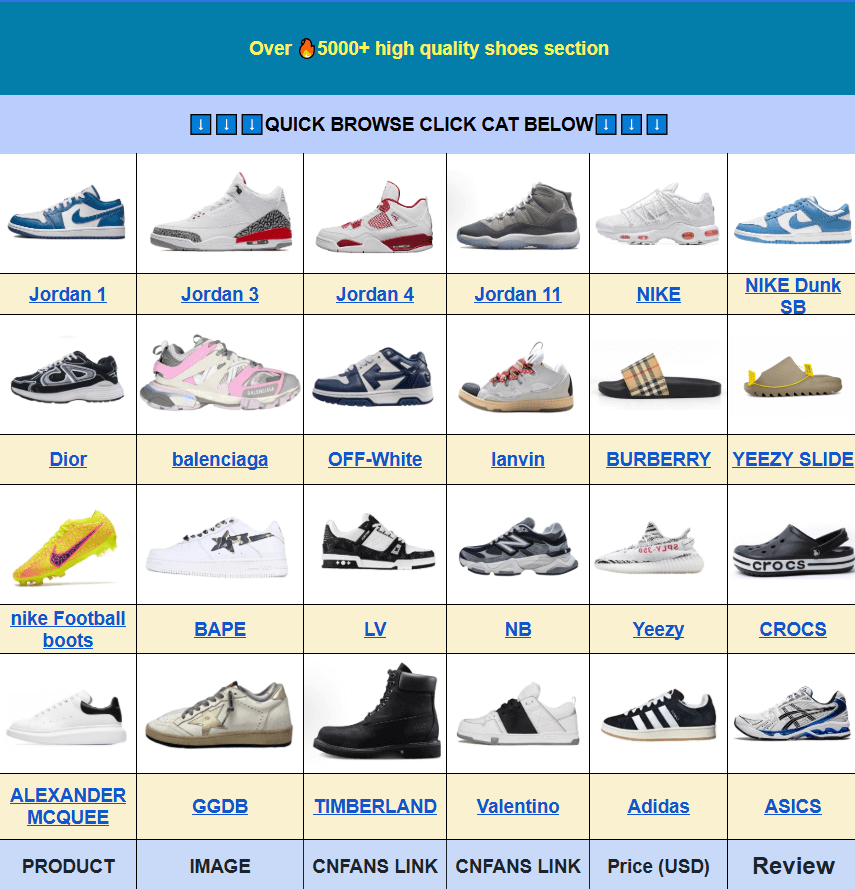
Category-Specific Inspection Checkpoints
Not every QC checklist should be identical. Shoes, bags, hats, and other accessories have different construction features, so the most useful inspection questions depend on the product type.
Footwear: Examine the pair as a pair
For shoes, compare both items rather than reviewing one shoe in isolation. Look at the overall shape, toe area, heel alignment, visible stitching, sole attachment, and any prominent design details. Check whether the two shoes appear consistent in color and construction.
Useful questions include:
- Do both shoes appear to have the same general shape and size?
- Are the soles visibly aligned with the uppers?
- Are there obvious gaps, glue marks, damaged edges, or uneven stitching?
- Do the colors and major design details appear consistent with the selected product?
- Are the size marking and any available insole measurement visible?
These observations can identify visible concerns, but they cannot establish how comfortable the shoes will be, how long they will last, or how they will perform under repeated use.
Accessories: Focus on structure and hardware
For bags, belts, wallets, hats, and similar accessories, inspect the shape, seams, edges, closures, buckles, zippers, and other hardware. Look for asymmetry, loose threads, surface marks, and visible damage. For structured products, check whether the shape appears consistent with the listing.
For bags, interior space and dimensions may matter more than a front photograph. For hats, circumference, brim shape, and adjustability may be more useful than a generic size label. For belts, the usable length, buckle dimensions, and hole spacing may be important to the final decision.
For shoppers exploring accessory listings, the Kakobuy Spreadsheet Best Accessories category can help organize product discovery before you move to the detailed source information and inspection stage.
Clothing: Inspect the garment’s construction and proportions
For shirts, hoodies, jackets, and trousers, examine seams, hems, cuffs, collars, zippers, pockets, and visible graphics. Compare the garment’s proportions with the listing and check whether the photographed item appears to be the selected size.
For clothing, a full front photograph may not show the back print, inside label, pocket construction, or sleeve details. If one of these features affects your decision, look for a relevant angle instead of assuming that the unseen area matches the listing.
| Product type | Useful photo checkpoints | Additional information to verify |
|---|---|---|
| Shoes | Pair symmetry, sole attachment, stitching, heel, visible marks | Foot length, insole length, selected size |
| Bags and wallets | Edges, seams, hardware, closures, surface appearance | Dimensions, strap length, interior layout |
| Hats | Brim shape, crown structure, stitching, visible marks | Head circumference, adjustability, dimensions |
| Clothing | Seams, hems, graphics, labels, zippers, proportions | Chest width, shoulder width, length, sleeve length |
Measurements, Labels and Product Details
Photos and measurements answer different questions. A photograph may show that a garment looks narrow, but it cannot reliably tell you whether the chest width will fit. A shoe may look large in an image, but its actual insole length still needs to be checked.
Use the seller’s dimensions instead of guessing
Size labels vary between manufacturers and product batches. A familiar retail size in the US, UK, EU, Australia, or another market should be treated as an initial reference rather than a guaranteed equivalent.
For clothing, compare seller-provided chest width, shoulder width, garment length, sleeve length, waist, or hip measurements with a suitable item you already own. Check whether the seller measures the garment flat or uses another method. The measurement method matters because two numbers with the same label may not describe the same dimension.
For shoes, compare your foot length with the seller’s size chart and available insole information. An insole measurement is not necessarily identical to the usable internal space of the shoe. Shape, padding, and construction can affect fit.
For accessories, look for dimensions, strap length, opening size, capacity, and weight where relevant. If the product’s size is important but the listing does not provide a reliable measurement, consider requesting clarification before ordering.
Do not confuse a visible label with a verified specification
A label or printed material description may be visible in a QC photograph, but the image alone does not independently verify the claim. Similarly, a photo of a thick-looking fabric does not establish its exact composition or weight.
Record the source of each important detail. A seller-provided measurement, a photograph, and an external platform’s description are different forms of evidence. Keeping them separate makes it easier to identify what still needs confirmation.
What Photos Cannot Confirm
QC photos are valuable precisely because they provide visual evidence, but their limits should be explicit. Even multiple clear images cannot establish every property of a product.
- Exact material composition: Appearance alone cannot verify the percentage of cotton, polyester, leather, synthetic fibers, or other materials.
- Long-term durability: A clean seam or attractive surface does not prove how the item will perform after repeated use.
- Comfort: Fit, cushioning, stiffness, breathability, and personal comfort cannot be fully determined from photographs.
- Authenticity: A logo, label, or packaging image is not conclusive proof of brand origin or authenticity.
- Chemical properties: Photos cannot establish chemical composition, treatment, or safety-related material properties.
- Performance: Images cannot demonstrate how a product will function under real-world conditions.
This does not make QC review pointless. It means the review should be matched to the question. If the question is whether a visible mark exists, photographs may be useful. If the question is whether the fabric will remain durable after many washes, another form of evidence is needed.
Lighting and camera angle can change what you see
Color may appear different under warm or cool lighting. Reflections can make surfaces look smoother, while shadows may conceal small marks. Perspective can also distort proportions. Compare multiple views where possible, and avoid treating one close-up as a complete representation of the item.
When to Ask Questions Before Shipping
The purpose of QC review is not to find a problem in every item. It is to identify questions that matter enough to resolve before the next stage. A useful question describes the specific uncertainty instead of making a broad statement such as “Is this good quality?”
Examples of practical questions include:
- Can you provide a clearer image of the stitching near the affected seam?
- Can you confirm the selected size and provide the available insole or garment measurements?
- Is the visible mark on the surface, or could it be a reflection or shadow?
- Can you show the back or interior of the item?
- Does the photographed item include the packaging or accessory described in the listing?
The external ordering platform may have its own rules for requesting additional photographs, reporting a mismatch, or handling an item before dispatch. Review those procedures rather than assuming that every request will be available or free of charge.
Use a simple decision record
For each item, record three things: what the photos show, what remains unclear, and what action you want to take. This creates a more defensible decision than relying on memory after reviewing several products.
| Observation | Interpretation | Next step |
|---|---|---|
| Visible loose thread near a seam | Potential construction issue | Request a clearer close-up or clarification |
| Color appears different from the listing | Could be lighting, variant, or actual mismatch | Compare additional views and verify the selected color |
| No insole measurement shown | Fit evidence is incomplete | Check the size chart or request a measurement |
| Only front view available | Back and interior remain unexamined | Determine whether additional views are needed |
International Shipping and the Final Review
Once you are satisfied with the available product information, the next question is whether the item should be shipped. For international buyers, this decision includes more than the appearance of the product.
Before dispatch, check the final package information and the shipping options provided by the external platform. Product weight, dimensions, packaging, destination, and available routes may affect the total cost. Bulky items can be affected by volumetric weight, so a lightweight product may still occupy substantial package space.
For buyers in the US, Canada, the UK, EU, Australia, New Zealand, and other destinations, customs and tax requirements vary. Check current official guidance for your country. Do not assume that a particular delivery service, tax arrangement, or shipping label automatically applies to your destination.
Review the item one last time
Before shipping, confirm:
- The selected product and variant match the intended purchase.
- The available QC photos have been reviewed for relevant visible concerns.
- Important measurements and specifications have been checked.
- Any questions about visible defects or missing details have been addressed as far as possible.
- The final shipping estimate, package details, and destination charges are understood.
- The external platform’s terms for refunds, claims, and post-shipping issues have been reviewed.
Once a parcel leaves the warehouse, resolving a product issue may become more complicated. A pre-shipping review cannot eliminate every risk, but it gives you a clearer record of what was visible and what information was available at the time of the decision.
Frequently Asked Questions
Q: What are Kakobuy QC photos used for?
A: They provide visual evidence of a specific item before dispatch, where the external ordering platform offers that service. They can help you inspect visible construction, color, shape, labels, and other product details.
Q: Can QC photos prove that a product is durable?
A: No. Photos may reveal visible damage or construction details, but they cannot establish long-term durability, repeated-use performance, or exact material composition.
Q: How should I review QC photos for shoes?
A: Compare both shoes for shape, symmetry, color, sole attachment, stitching, visible marks, and other relevant design details. Also check foot length, insole information, and the seller’s size chart before deciding on fit.
Q: What should I do if a QC photo is unclear?
A: Identify the exact uncertainty and check whether the external platform allows additional photographs, measurements, or clarification. If a key detail remains unresolved, do not treat it as confirmed.
Q: Are QC photos enough to confirm the material listed by the seller?
A: No. A photograph may show the surface appearance or a visible label, but it cannot independently verify the precise material composition. Use the seller’s stated information and seek further clarification if the specification is important.
Q: Should I check shipping costs before reviewing QC photos?
A: Both stages matter. A preliminary budget helps determine whether an item is worth researching, while the final package details and available shipping options are more useful when deciding whether to dispatch it internationally.
Effective QC review is a process of narrowing uncertainty. Start with the correct product, compare the listing with the available images, inspect the construction details relevant to the category, and separate visible evidence from assumptions. When a measurement, feature, or defect matters to your purchase, make that specific point the focus of your review. This approach helps you use a spreadsheet-based product catalog for discovery while making better-informed decisions before the external ordering and shipping stages.