The website converts spreadsheet-based sourcing information into a web catalog, making it easier to browse products, compare listings, and investigate details before moving to an external shopping agent or ordering platform. Each example below follows a different purchasing problem and shows how shoppers can improve their research process.
Smart Search Tip: Looking for more? To find items instantly, use single-word keywords (e.g., “SHOES” or “T-SHIRT”) instead of long sentences for the best results.
Table of Contents
- What Makes a Sourcing Story Useful?
- Story One: Turning a Shoe Find into a Fit-Based Shortlist
- Story Two: Finding the Right Accessory Through Details
- Story Three: Checking Electronics Before the Price
- The Evidence Behind a Better Purchase Decision
- From Catalog Discovery to External Ordering
- Frequently Asked Questions
What Makes a Sourcing Story Useful?
A useful sourcing story does not need an impressive discount or a dramatic before-and-after result. It can simply show how a shopper handled a common problem: an uncertain size, a vague product description, an incomplete photograph, or a shipping arrangement that changed the expected cost.
For an international audience, a successful research process has three parts:
- A clear requirement: The shopper knows what the product needs to do, how it should fit, or which dimensions matter.
- Relevant evidence: The listing provides enough information to compare options, and available QC photos are interpreted within their limits.
- A suitable ordering decision: The shopper checks the external platform, shipping conditions, and any unresolved questions before committing.
These stages matter because a sourcing catalog is not the same as a completed transaction. A product entry can help someone discover an item, but it does not automatically confirm current stock, final shipping costs, technical performance, or suitability for a particular buyer.
Story One: Turning a Shoe Find into a Fit-Based Shortlist
The scenario: A shopper is looking for casual sneakers and notices several attractive listings at different prices. The photographs are appealing, but the available size labels do not provide enough information to determine which pair will fit.
The weak approach would be to choose the lowest-priced listing and rely on a familiar US, UK, or EU size. The more useful approach is to turn the search into a measurement comparison.
Step 1: Define the actual requirement
The shopper should first identify the intended use. A casual everyday shoe, a running shoe, and a fashion-focused pair may have different fit expectations. Foot length, width, toe-box shape, cushioning, and sole construction can all influence suitability.
Next, measure both feet while standing and record the longer foot’s length in centimetres. This provides a more consistent reference than relying on a size label alone.
Step 2: Compare the listings
When reviewing footwear entries, look for a seller-provided size chart, insole length, outsole dimensions, and photographs of the shoe’s shape. These details do not eliminate uncertainty, but they make the comparison more concrete.
| Information | What the shopper records | Why it matters |
|---|---|---|
| Foot length | Longer foot measurement in centimetres | Provides a personal reference for the seller’s chart |
| Insole length | Seller’s stated measurement and how it was taken | Helps compare internal dimensions, with appropriate caution |
| Width or shape | Any available width information and toe-box photographs | May reveal whether the shoe’s shape suits the intended fit |
| Construction | Sole, stitching, upper, and heel photographs | Allows a review of visible finishing and structure |
Step 3: Use QC information carefully
If QC photos are available after an order has reached the external agent, the shopper can inspect visible features such as loose threads, uneven stitching, sole-edge separation, obvious glue marks, or differences between the left and right shoe. A photograph of the insole may also help establish whether the received measurement appears consistent with the listing.
However, QC photographs cannot establish long-term comfort, exact material composition, durability after months of wear, or how the shoe performs during exercise. A successful research process records those limits instead of treating a clear photograph as a complete product test.
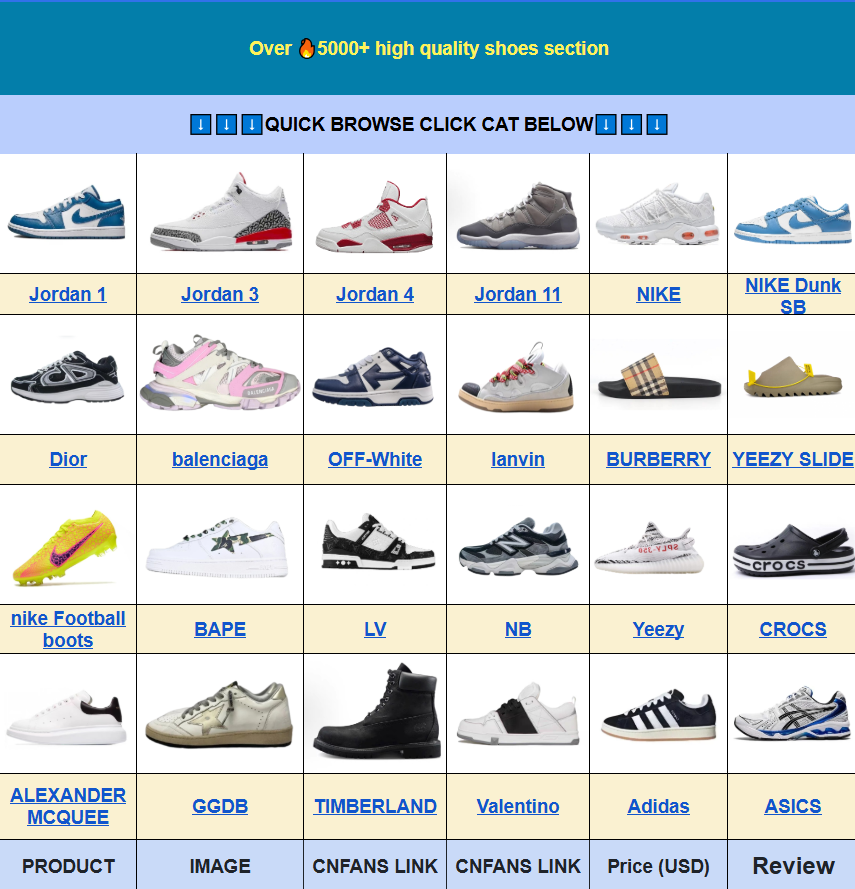
For shoppers who want to continue comparing footwear, the catalog’s shoe navigation can help organize the search by product type. The important outcome of this scenario is not a guaranteed purchase result. It is a shortlist based on measurements and visible evidence rather than a size label and an attractive image alone.
Story Two: Finding the Right Accessory Through Details
The scenario: A shopper wants a compact everyday bag or another small accessory. Two listings appear similar, but one is cheaper and the other provides more information about dimensions, closures, and construction.
Accessories often look simple to compare. In reality, a small difference in size, strap length, closure design, or internal layout can change whether the product is useful. This is especially important for shoppers buying from international markets, where returning an unsuitable item may involve additional time and expense.
Measure the object you need to carry
Suppose the shopper wants a bag for a phone, wallet, keys, and a small power bank. Instead of judging capacity from a photograph, the shopper can measure the largest item and compare it with the bag’s listed length, height, and width. The shape of the opening and the thickness of internal padding may also affect usable space.
For other accessories, the relevant measurements change:
- Belts: Compare the usable adjustment range, hole spacing, buckle dimensions, and total length where available.
- Wallets: Check the number of card slots, approximate dimensions, opening, and whether the layout suits the intended contents.
- Caps and hats: Look for head circumference, adjustment method, and any available brim or crown measurements.
- Small cases and pouches: Compare internal dimensions, zipper opening, lining details, and the size of the intended device or object.
Read photographs for construction clues
When close-up images are available, examine the points most likely to affect everyday use. For a bag, these may include strap attachments, corners, handles, stitching, and zipper tracks. For a wallet, inspect the edges, folds, slot openings, and visible surface finishing. For a belt, look at the buckle connection and the adjustment holes.
QC photographs can show visible defects, uneven finishing, scratches, hardware damage, and inconsistencies in appearance. They cannot reliably prove the exact material composition or how the accessory will age after repeated use.
For shoppers who want to narrow this type of search, the litbuy spreadsheet accessories category provides a relevant starting point for browsing accessory listings. A practical shortlist might contain three options: the lowest-priced item with sufficient information, a better-documented alternative, and a third option with different dimensions or features.
When the cheaper option is not the clearest option
A price difference should be examined alongside the information available. If one listing has a clearly stated dimension chart and detailed photographs while another has only a general description, the shopper cannot make a complete comparison yet. The next step is to investigate the missing information, not to assume that either product is superior.
This is one of the most transferable lessons from sourcing research: clarity has practical value. A listing that answers the buyer’s actual questions can reduce uncertainty even when its price is not the lowest.
Story Three: Checking Electronics Before the Price
The scenario: A shopper discovers an inexpensive electronic accessory and wants to know whether it will work with existing equipment. The product photograph shows the device, but the listing does not clearly identify the model, power requirements, or connector standard.
For electronics, the first question should not be “How much cheaper is it?” It should be “Does this product meet the technical requirement?” A low price has little practical value if the item is incompatible with the intended device.
Build a specification-first comparison
Before comparing listings, write down the minimum requirements. For a charger or power accessory, this may include input voltage, output voltage, wattage, connector type, and supported charging standards. For a storage device, capacity, interface, physical dimensions, and compatibility may be relevant. For a wireless accessory, the supported connection method and operating-system requirements may matter.
| Checkpoint | Question to answer |
|---|---|
| Model | Is the exact model or version identified? |
| Power | Are the input, output, and applicable electrical ratings clear? |
| Compatibility | Will the item work with the intended device or operating environment? |
| Ports and connectors | Are the connector type and supported standards specified? |
| Physical dimensions | Will the product fit the intended space or setup? |
| Shipping conditions | Are battery restrictions or other transport requirements relevant? |
Separate visible evidence from technical proof
A QC photograph may show the exterior, labels, ports, packaging, and obvious physical damage. It cannot reliably prove internal component quality, electrical safety, battery condition, or sustained performance. If the listing does not provide the necessary technical information, the shopper should treat the item as requiring further verification.
For international buyers, compatibility also includes the destination’s electrical system and applicable transport rules. Plug types and mains voltage differ across markets, and some products containing batteries may be subject to carrier restrictions. The external ordering platform should be checked for current shipping eligibility and relevant product policies.
The practical result of this scenario is a more useful decision: the shopper may proceed with a well-documented option, continue researching, or leave the listing aside. None of these outcomes requires claiming that a purchase was completed or that the product performed successfully.
The Evidence Behind a Better Purchase Decision
Across these scenarios, the strongest research process is built around matching evidence to the product type. A shoe needs fit and construction checks. An accessory needs dimensions and finishing details. Electronics need model-specific technical information. The same browsing method can support all three, but the inspection criteria should not be interchangeable.
Use a simple decision record
For each shortlisted item, record what is confirmed and what remains uncertain. A short note can be more useful than saving a large number of links without context.
- Confirmed: The listing provides the required measurement, model detail, or visible feature.
- Needs clarification: A critical detail is missing or ambiguous.
- Not suitable: The product does not meet a known requirement.
- Recheck before ordering: The external platform may contain updated listing information, charges, or ordering conditions.
This method also helps prevent a common mistake: treating the presence of QC photos as proof that every aspect of a product has been verified. The photos are evidence about what they show. Their value depends on the angle, lighting, detail, and the specific question being asked.
From Catalog Discovery to External Ordering
Once a shopper has selected a listing, the next stage is not simply to click through and assume that the original catalog information is the final order information. The website is primarily a discovery and comparison platform. The external agent or ordering platform handles the purchase process.
Review the complete cost
Separate the product price from international shipping, any service or processing charges, packaging costs, and applicable import-related charges. The actual total depends on the destination, product, package characteristics, and ordering arrangement.
For the US, Canada, UK, EU, Australia, New Zealand, and other destinations, customs, VAT, GST, carrier policies, and import procedures can differ. Check the current rules for your country. Do not assume that a tax or delivery arrangement available for one destination automatically applies to another.
Check the ordering route before committing
Confirm that the external platform can process the seller link, that the listing remains available, and that the product can be shipped to the intended destination. For electronics, review battery and restricted-item policies. For shoes and accessories, consider package size, protective packaging, and whether combining products changes the shipping calculation.
The homepage litbuy spreadsheet catalog can serve as the initial browsing point, but the external ordering platform is where the shopper must review the actual purchase conditions. A well-researched find is valuable because it helps the buyer ask better questions before that step.
Frequently Asked Questions
Q: Are these Litbuy success stories based on verified customer purchases?
A: No. The examples are practical sourcing scenarios designed to explain how shoppers can evaluate listings and make more informed decisions. They do not claim that a particular customer completed an order, received a product, or achieved a specific saving.
Q: What makes a product find worth investigating?
A: A relevant product description, useful measurements or specifications, identifiable sourcing information, and photographs that address the important details. A low price alone is not enough to establish that an item is suitable.
Q: Can QC photos guarantee product quality?
A: No. QC photos can reveal visible defects, finishing issues, dimensions when shown, and some aspects of appearance. They cannot prove exact material composition, long-term durability, comfort, electrical safety, or performance over time.
Q: How should I compare shoe sizes from different listings?
A: Compare your measured foot length with each seller’s measurement chart. Check insole dimensions where available and consider width and shoe shape. Do not assume that the same US, UK, or EU size label will fit identically across manufacturers or batches.
Q: What should I do if an electronic listing lacks important specifications?
A: Mark the listing as requiring clarification. Check for a precise model number, power ratings, connector details, compatibility information, and relevant documentation. If a critical specification remains unknown, avoid treating the product as a confirmed match.
Q: Does a successful sourcing process guarantee a successful delivery?
A: No. Research can improve the quality of a purchase decision, but delivery depends on the external ordering platform, seller, carrier, destination, and applicable customs or transport requirements. Review those conditions separately before ordering.
A useful Litbuy success story is not necessarily the one with the biggest discount. It is the one in which the shopper starts with a clear need, finds relevant information, checks the details that matter, and understands what remains uncertain before placing an order. That process makes the catalog more useful as a sourcing tool and gives international buyers a clearer basis for deciding which finds deserve further attention.