For shoppers using a large product directory, outdated information can be more frustrating than having too many choices. A link may stop working, a product listing may change, or useful QC information may no longer match what is currently available. That is why Kakobuy spreadsheet real time updates matter: the value of a sourcing catalog depends not only on how many products it contains, but also on how practical and current that information is.
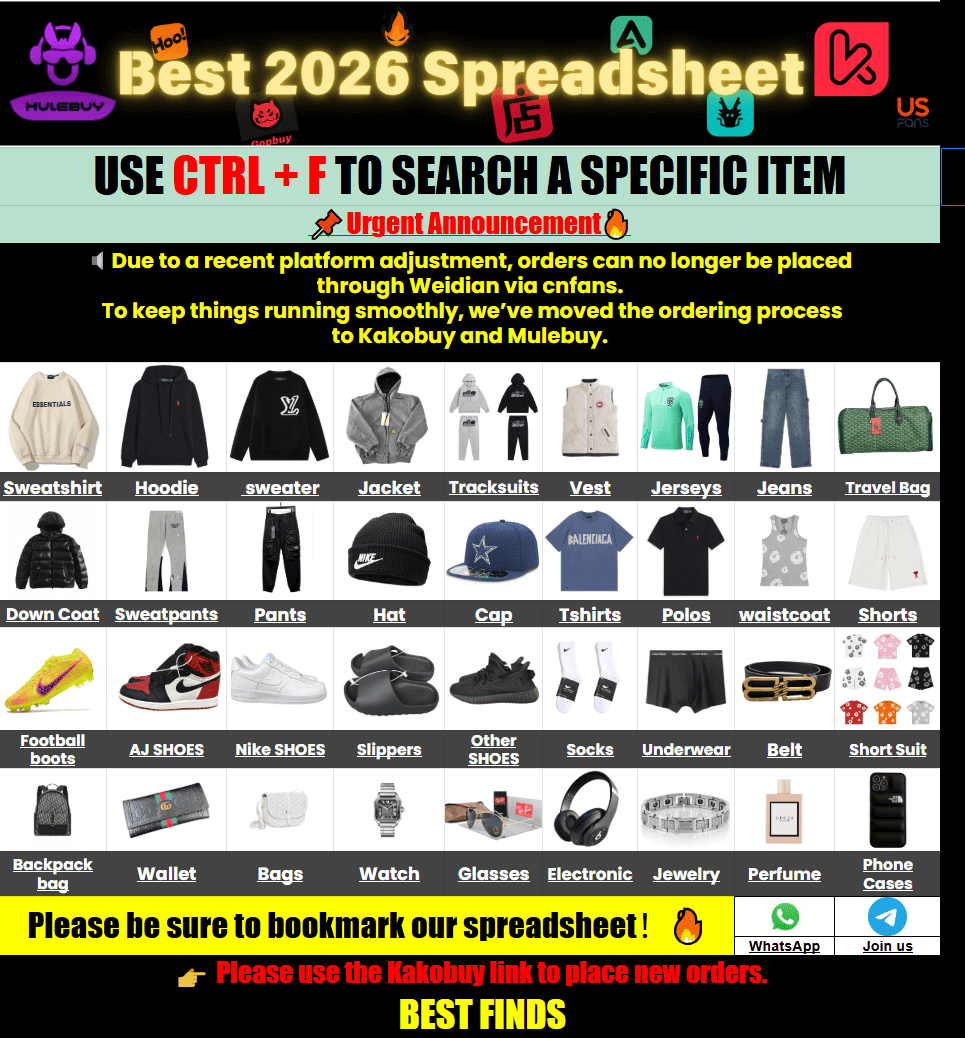
Kakobuy Spreadsheet Pro approaches this problem by turning spreadsheet-style sourcing information into a web-based product catalog. Instead of repeatedly loading a large Google Sheet and searching through rows, users can browse products in a more familiar catalog format, inspect available information, and follow an external purchasing link when they are ready to proceed.
The important point is that an update should not simply mean adding more rows. A useful update can involve replacing an outdated link, refreshing product information, adding newer QC material, correcting categorization, or making a listing easier to discover.
Smart Search Tip: Looking for more? To find items instantly, use single-word keywords (e.g., “SHOES” or “T-SHIRT”) instead of long sentences for the best results.
What Real-Time Updates Actually Mean
The phrase “real time” can be misleading if it is interpreted as meaning every product changes at exactly the same second as the original marketplace. A web catalog is better understood as an actively maintained information layer. Its usefulness comes from keeping important sourcing information reasonably current and making changes easier for shoppers to notice.
For a spreadsheet-based product directory, updates can happen at several levels:
- Product discovery: new listings or newly useful products can be added.
- Link maintenance: outdated or broken sourcing links can be identified and replaced when appropriate.
- Product information: titles, descriptions, available specifications, or other listing details may change.
- QC information: available inspection imagery or product references can be refreshed when new information exists.
- Organization: products can be placed into more useful categories or searchable groups.
This distinction is important. A catalog with fewer but better-maintained entries can be more useful than a huge directory filled with links that are difficult to verify.
For users who want to explore a large collection without wrestling with a slow spreadsheet interface, the web catalog provides a more convenient starting point. The Kako buy spreadsheet homepage serves as the central entry point, while individual product and category pages make narrower searches easier.
Why Freshness Matters More Than Raw Link Counts
A common mistake is judging a sourcing directory almost entirely by its advertised number of products. Volume is useful, but freshness has a direct effect on the amount of work required from the shopper.
Imagine two catalogs. Catalog A contains thousands of entries but leaves users to discover which links still work. Catalog B contains a more focused selection where obsolete information is regularly removed or replaced. For someone trying to make a purchase decision, Catalog B may produce less wasted time.
| Update Area | What the Shopper Should Look For | Why It Matters |
|---|---|---|
| Product link | Does the destination still open the expected listing? | Prevents time being spent on unavailable or unrelated pages |
| Product details | Do the visible specifications still match the listing? | Helps avoid decisions based on outdated information |
| QC material | Are the available images relevant to the current item? | Provides visual information before an external order |
| Category placement | Can the item be found under an appropriate category? | Makes a large catalog easier to browse |
Freshness also changes the way users should interpret search results. A newly surfaced item is not automatically better than an older listing. The more useful question is whether the available information is sufficient for a sensible comparison.
How to Read an Updated Listing
Frequent updates can make a catalog more useful, but they also require shoppers to read product information carefully. A listing should be treated as a starting point for evaluation rather than a guarantee of quality, availability, or future performance.
Start with the basic identification details. Does the product category make sense? Is the product title consistent with the images? If a specific size, color, or configuration is mentioned, can that information be checked against the available listing details?
For apparel, measurements are usually more useful than generic size labels. A seller’s “L” may not correspond closely to an L from a US, UK, EU, or Australian retailer. Compare measurable information such as chest width, garment length, shoulder width, sleeve length, waist, and hip measurements whenever those figures are available.
For footwear, foot length and insole measurements are more informative than simply choosing your normal US, UK, or EU size. Manufacturing conventions can vary, and even products that look similar can have different internal dimensions.
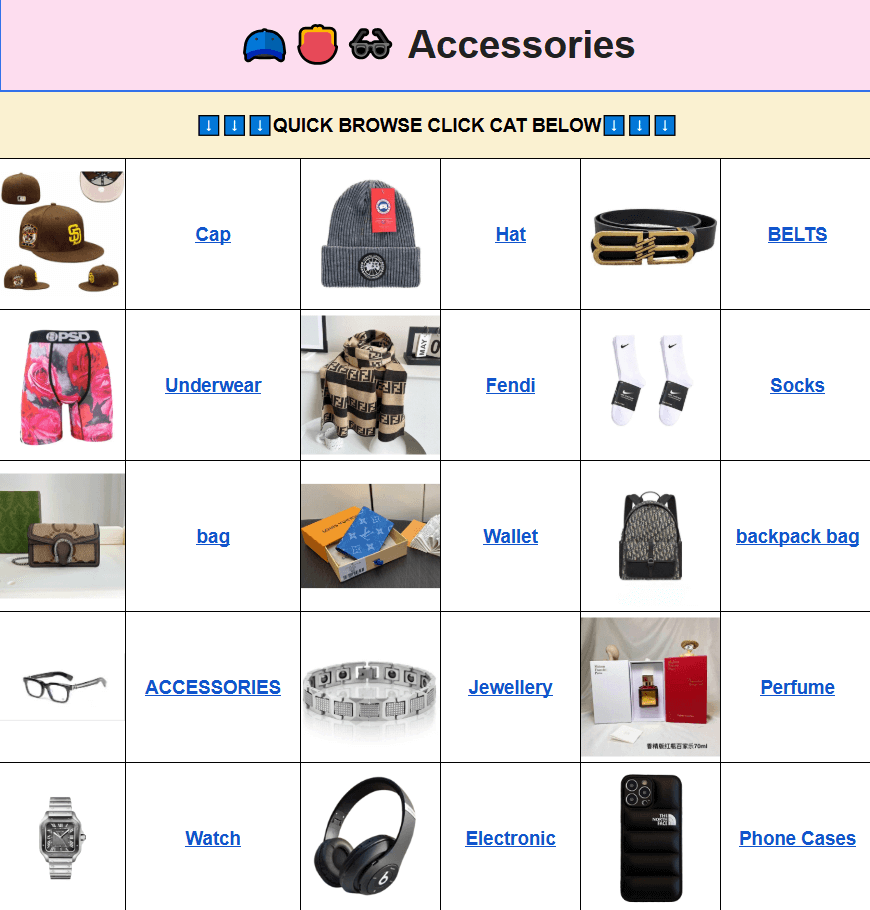
Accessories also deserve specification checks. Depending on the item, useful measurements can include dimensions, weight, hardware size, strap length, capacity, or material thickness. The exact specification that matters depends on the product.
Look for changes, not just the newest date
An update date can be useful context, but it should not replace product-level inspection. A catalog may have been updated recently while an individual listing still contains information that needs closer examination.
For example, if you find a jacket that looks suitable, check the current measurements, visible construction, color options, and available images before moving to the external purchasing platform. If the information is incomplete, that uncertainty should be part of your buying decision.
For users specifically browsing footwear, the site’s Kakobuy Spreadsheet Shoes category can provide a more focused starting point than searching through a general spreadsheet.
What QC Information Can and Cannot Tell You
QC images can be valuable because they provide visual evidence that is difficult to get from a simple product title. They can help shoppers inspect visible construction and compare the actual appearance of an item against its listing information.
Useful visual checkpoints include:
- stitching consistency and obvious loose threads
- graphic or print alignment
- visible color consistency
- shape and overall structure
- symmetry between visible components
- hardware, zippers, buttons, and other visible fittings
- tags and labels where visible
- shoe sole construction and obvious finishing issues
- packaging condition when it is relevant to the item
There are limits, however. A photograph cannot reliably establish long-term durability, exact fabric composition, chemical composition, future comfort, or how a product will perform after months of use. It also should not be treated as definitive proof of authenticity.
The best approach is to use QC information as one evidence source alongside measurable specifications, listing details, seller information, and your own requirements.
A More Efficient Search Workflow
Real-time catalog maintenance becomes most useful when combined with a disciplined search process. Instead of opening dozens of random listings, use a short sequence that narrows the field before you spend time on detailed inspection.
- Start with a simple keyword. Use a product term such as “SHOES,” “JACKET,” or “T-SHIRT” rather than a long natural-language search.
- Filter by the product you actually need. Avoid opening every result simply because the thumbnail looks interesting.
- Check specifications. Look for measurements, dimensions, available colors, sizing information, and other product-specific details.
- Review available QC information. Focus on visible issues rather than trying to infer things photographs cannot prove.
- Compare several candidates. A single attractive listing is not necessarily the best choice.
- Confirm the external destination. Before completing an order, make sure the purchasing platform and product details correspond to what you intended to select.
This workflow also reduces the impact of catalog changes. If a listing disappears or becomes unavailable, you already know the specifications you were looking for and can compare another candidate without restarting the entire search.
For shoppers who prefer a category-first approach, browsing a dedicated product catalog can be substantially easier than scanning hundreds of spreadsheet rows. The key advantage is not merely visual presentation; it is the ability to move from discovery to comparison without losing track of what each listing represents.
What International Buyers Should Check
An updated product listing does not mean that the final delivery conditions are fixed. International shoppers still need to consider the destination country, available shipping methods, parcel characteristics, customs procedures, and the policies of the external purchasing platform.
For buyers in the US, Canada, UK, EU countries, Australia, New Zealand, and elsewhere, the practical checks are broadly similar, but the applicable rules can differ by destination.
- Destination: Confirm that the purchasing platform offers a suitable shipping route to your country.
- Parcel weight: Shipping calculations may depend on actual weight, volumetric weight, or both.
- Customs: Import procedures and documentation requirements vary by destination.
- VAT/GST: Tax treatment differs between countries and circumstances. Check current local guidance rather than relying on an old spreadsheet note.
- DDP or DDU: Understand whether duties and taxes are handled before delivery or may be collected from the recipient.
- Restricted products: Certain goods may face transportation or import restrictions.
For EU destinations in particular, do not assume that a product catalog’s information automatically determines VAT treatment or customs handling. Current rules and the actual shipping arrangement should be verified before placing an order.
Australia and New Zealand buyers should also pay attention to biosecurity requirements where applicable. Product type, packaging, materials, and destination regulations can affect whether additional checks apply.
Common Mistakes With Frequently Updated Catalogs
Fresh information is useful, but it can encourage a different kind of mistake: assuming that the newest listing is automatically the safest choice.
1. Treating an update as a quality guarantee
A recently updated entry tells you that information has changed or been reviewed; it does not establish the underlying product’s quality. Use the update as a reason to inspect the listing, not as a substitute for inspection.
2. Choosing by thumbnail alone
Small images are excellent for discovery but poor for detailed assessment. Open the available product information and look for measurable specifications before deciding.
3. Ignoring measurements
Generic S/M/L or numerical footwear sizes can create unnecessary risk. Compare seller-provided measurements with an item you already own when possible.
4. Assuming an active link means permanent availability
Marketplace inventory can change. A product that is visible today may later become unavailable, change configuration, or have different selectable options. Check the external destination before proceeding.
5. Forgetting the final shipping stage
The product price is only one part of the decision. International shipping, possible taxes, duties, handling, and destination restrictions can materially change the overall cost and convenience.
FAQ
Q: How often is the Kakobuy Spreadsheet updated?
A: Update frequency can vary by the information being maintained. Rather than assuming every listing changes on a fixed schedule, check the current product information and external destination before ordering.
Q: What does a real-time update mean for a product catalog?
A: It generally means that useful sourcing information is actively refreshed, which may include new products, corrected links, updated details, categorization changes, or refreshed QC information. It does not necessarily mean that every marketplace change appears instantly.
Q: Can QC photos confirm product quality?
A: They can help identify visible issues such as stitching problems, misalignment, shape irregularities, or hardware defects. They cannot reliably prove long-term durability, exact material composition, comfort, or other properties that require physical testing.
Q: Should I trust the size shown on the product page?
A: Treat the displayed size as a reference rather than a universal measurement. Seller-provided dimensions such as chest width, garment length, foot length, or insole length are usually more useful for international shoppers.
Q: Does an updated listing guarantee that the item is still available?
A: No. Marketplace inventory can change independently of a catalog. Always open the external destination and verify the current product, options, and availability before completing a purchase.
Q: What is the advantage of a web catalog over a traditional Google Spreadsheet?
A: A web catalog can make a large sourcing collection easier to browse, search, categorize, and inspect. The underlying information may be similar, but the presentation reduces the friction of navigating a very large spreadsheet.
The practical value of Kakobuy Spreadsheet Pro in 2026 is therefore less about a simple promise of “more links” and more about making useful sourcing information easier to discover and reassess as listings change. Real-time maintenance helps reduce outdated information, but smart shoppers should still verify the product page, measurements, QC details, and shipping conditions before committing to an external purchase.